Botkeeper rolls out June 2026 automation features for bookkeeping
Botkeeper announces new product releases for June 2026 aimed at enhancing AI-driven bookkeeping automation capabilities.
Botkeeper announces new product releases for June 2026 aimed at enhancing AI-driven bookkeeping automation capabilities.

Digits debuts Agentic Close, an AI agent for financial closing workflows, as Expensify and Ignition release new model context protocols and Xero waives ACH fees.

CPAs should use AI to streamline R&D credit documentation and analysis but must retain responsibility for professional judgment and Circular 230 compliance.
Docyt introduces ProfitBooks, an AI-powered bookkeeping automation tool designed to eliminate manual record-keeping for small businesses by automating invoice processing, expense tracking, and fina...
AppZen argues that custom-built AI agents for finance face compliance, hallucination, and audit trail risks that purpose-built platforms mitigate—positioning its own solution as safer.
United Accountants founder Karl Paadam argues AI will replace accountants who don't adopt it, positioning his AI OS to handle bookkeeping and reconciliation while CPAs focus on judgment and client ...
New open-source tool audits dbt projects to identify data quality issues that AI agents might overlook, improving reliability of AI-assisted accounting workflows.
AccountingWeb examines whether AI agents can genuinely automate month-end close processes for accountants, moving past vendor marketing claims to practical realities.
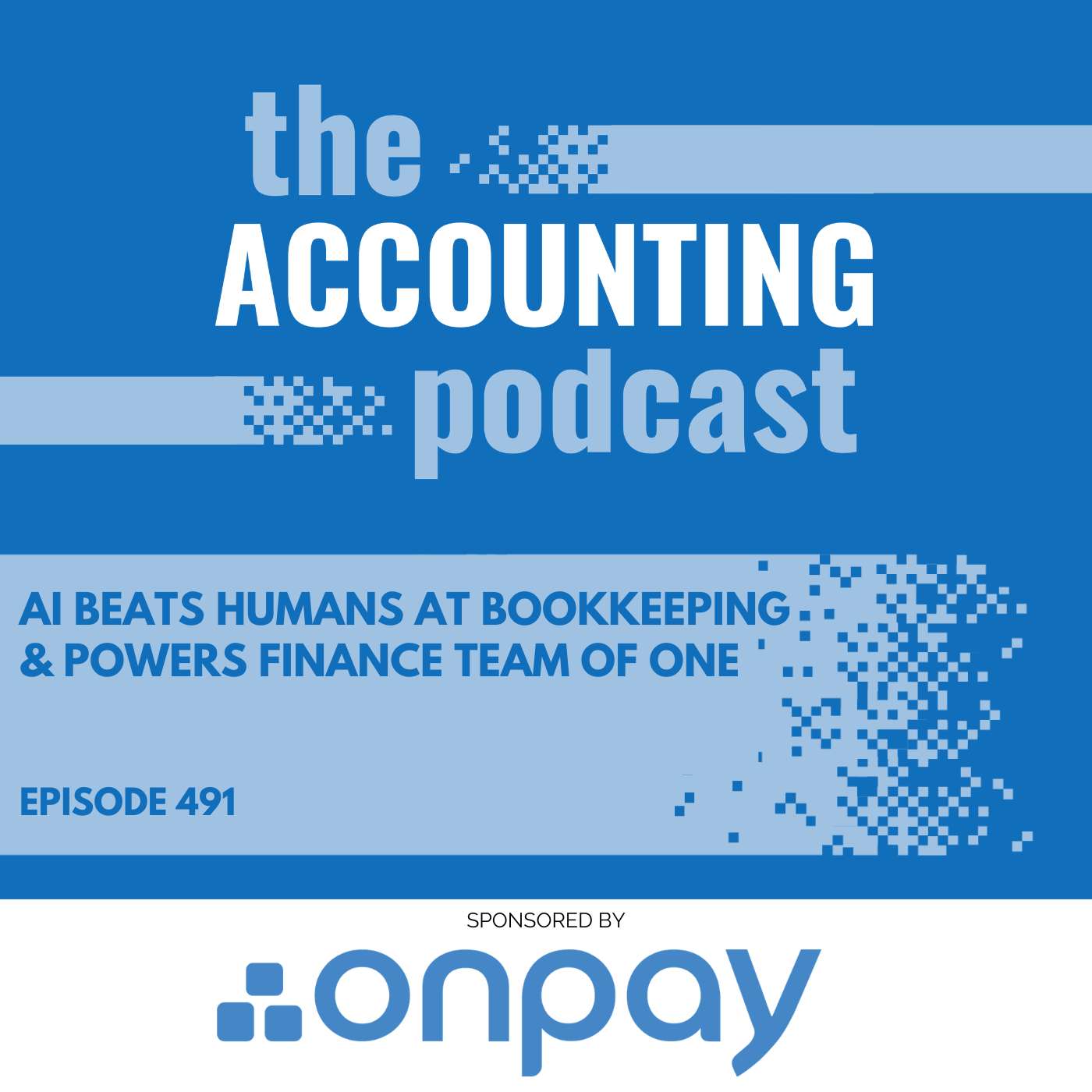
New data shows major LLMs beat outsourced accountants at basic bookkeeping tasks, while a SaaS controller manages $50M/month revenue solo using AI agents; KPMG races to invest in AI startups as fir...
Researchers propose Sovereign Assurance Boundary (SAB), a certificate-based control system for AI agents managing high-stakes financial infrastructure, addressing audit and authorization gaps in no...
Researchers introduce Trace2Policy, an AI system that extracts tacit decision rules from audit and compliance experts, then iteratively refines them through error analysis—automating expert judgmen...
ArXiv paper on Collaborative Human-Agent Protocol (CHAP) for managing multi-human, multi-agent systems in production—relevant to accounting firms deploying AI agents across audit, tax, and complian...

As taxpayers increasingly use AI to prepare returns, the accounting profession has failed to establish quality control or validation processes, raising accuracy and liability concerns.

Expensify released an MCP (Model Context Protocol) integration enabling users to query and analyze expense data via natural language, advancing AI-powered automation in expense management.
Fieldguide deployed Field Orchestrator, an agentic AI platform purpose-built to plan and execute full-scope audit engagements autonomously.

Digits' new Agentic Close system automates the entire financial close process—collecting, booking, reconciling, and reporting—for accounting firms, eliminating manual month-end workflows.
79% of CFOs now use AI for accounting tasks like invoice extraction and transaction classification, making AI governance an audit committee priority, per Deloitte's 2025 survey.
Stampli compares Oracle IDR with alternative AI invoice capture solutions, highlighting limitations of header-only recognition and fragmentation across AP systems for Fusion teams.
Inflo and HubSync integrate to offer an end-to-end AI-enabled solution for digital audit and tax workflows, combining their platforms for enhanced automation.

Blake Oliver argues AI will disrupt tax firm operations more than consumer tax software, citing observations from Black Ore AI Tax Summit and discussion on The Accounting Podcast.