Truewind releases 6-part framework for AI workpaper generation
Truewind's Workpaper Agent uses structured prompts to auto-generate audit workpapers with minimal revisions, targeting audit teams' close processes.
The latest on AI agents in audit: continuous monitoring, autonomous testing, PCAOB developments, and how Deloitte, EY, PwC, and KPMG are transforming audit workflows with artificial intelligence.
Truewind's Workpaper Agent uses structured prompts to auto-generate audit workpapers with minimal revisions, targeting audit teams' close processes.
Truewind's guide explores AI-driven anomaly detection for accounting teams, highlighting how digital tools catch GL mismatches and coding drift earlier in the close cycle than manual review.
Blog post identifies visibility breakdowns in financial controls—lost amortization entries, spreadsheet silos, missing documentation trails—as a core accounting operations problem Truewind targets.
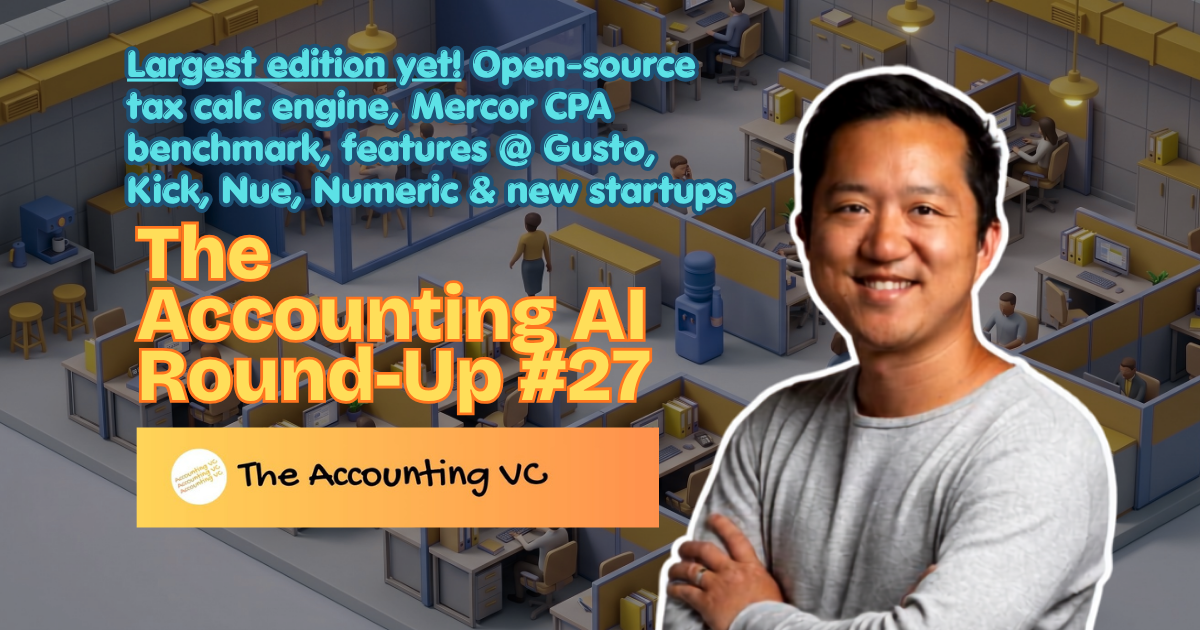
Mercor's CPA benchmark shows Claude Opus 5 achieves 100% on simplified month-end close tasks vs. 37% for junior accountants, but only reaches 54.5% on full APEX-Accounting benchmark, highlighting t...
Researchers introduce a budget-constrained evaluation framework for ML-based journal entry anomaly detection, comparing nine unsupervised detectors against supervised and deep semi-supervised metho...
Academic paper reveals how long-horizon AI agents are vulnerable to indirect prompt injection attacks across multi-step workflows, with implications for auditing AI systems used in accounting conte...
Research shows LLMs cannot reliably decide which verification rules require human oversight vs. automated checking in regulated domains like finance, complicating agent deployment in accounting and...
Researchers auditing an agentic LLM system for label ontology processing discovered that standard label agreement metrics mask critical failures in authorization, completeness, and evidence trackin...
Researchers audit 33 LLM judge configurations against 45,796 worker ratings, finding that high pair accuracy doesn't guarantee agreement on acceptance rates—critical for deploying AI in workplace t...
Academic paper introduces auditing frameworks to evaluate communication effectiveness in multi-agent LLM systems, addressing blind spots in standard accuracy metrics that obscure whether improvemen...
Firmcheck and Briefcase Ledger adopt Model Context Protocols to let Claude automate accounting tasks—AML checks, ledger management—without separate logins, raising questions about AI accountability...
Security expert explores how autonomous AI agents inadvertently expose sensitive data during execution, with implications for audit trails and compliance frameworks in regulated industries.
$290K in losses at major firms highlight critical AI reliability problems in audit contexts, raising questions about autonomous AI audit capabilities.
As SAP, Oracle, and Workday embed AI agents into financial workflows, MindBridge explores the audit and control challenge: who verifies results when AI handles transaction creation, classification,...
MindBridge's Vision 2026 conference surfaced key lessons on AI governance, financial integrity, and human judgment in audit—moving beyond mere automation to sustainable autonomous workflows.
IPA podcast explores how accounting firms are adopting AI software and pilots, with experts questioning whether purchase translates to meaningful workflow change.
Blake Oliver and David Leary explore how AI agents are reshaping accounting firms: EY reduced audit deficiencies from 28% to under 5%, pay rises for AI-exposed roles counter replacement fears, and ...
AccountingWeb warns that AI capabilities are being used in accounting practices without explicit approval, raising governance and compliance risks for firm leadership.
Suralink argues that mechanical audit tasks like tie-out and vouching should be automated, positioning software to handle these repetitive checks so auditors focus on judgment-based review work.

AuditDashboard rolled out AI Connectors enabling accounting firms to integrate Claude, ChatGPT, and Microsoft Copilot directly into client engagements and PBC data collection workflows.