Decimal partners with Puzzle's AI-native ledger to scale accounting services
Accounting firm Decimal adopted Puzzle's AI-native general ledger to boost operational efficiency and maintain service quality across hundreds of clients.
TLDW: AI won't replace accountants, but it will replace accountants who don't use AI and modern tooling—positioning human judgment and advisory as the future of the profession.
Key points:
Continue reading
There may be errors in spelling, grammar, and accuracy in this machine-generated transcript. Karl Paadam: So AI is not going to replace the accountant, but it will replace the accountant who doesn't use AI and who doesn't have the right tooling. Blake Oliver: Are you an accountant with a continuing education requirement? You can earn free Nasba approved CPE for listening to this episode, just visit earmarked.app in your web browser, take a short quiz and get your certificate. Blake Oliver: Welcome back to the Earmark Podcast. I'm Blake Oliver. My guest today says the future of accounting [00:00:30] is human, but at the same time, he's building an AI native accounting firm. Carl Adam made partner at PwC Estonia at 26, then left to build in tech. Now he's back with a point of view every accountant needs to hear. Let's get into it. Carl, welcome to the show. Karl Paadam: Uh, Blake, thank you so much for having me on the pod. I'm such a fan. Blake Oliver: I'm really curious about your background. Uh, 26 is really young to make partner at a big four [00:01:00] firm. Like, how did that happen? Karl Paadam: Um, I originally started as an entrepreneur, uh, when I was a teenager, so I originally started from tech and, uh, I'm from a really small place. So Estonia, um, is a small country in Europe. And, uh, I had built a reputation of being somebody who was able to build businesses and probably had created a reputation on the market of, uh, of being a bit of a rainmaker and earning trust of clients. So, [00:01:30] so I had this absolutely crazy opportunity, um, to, to join PwC, um, at that age. Um, and I, I guess I might have looked a little older, I was already losing my hair. So. Blake Oliver: So they, so they, uh, they decided to make you a partner. Um, what were, what were you doing at PwC? Karl Paadam: Yeah, so I, I, I started a practice for them, uh, in Estonia, um, with no clients and um, and nothing more than a desk. So [00:02:00] usually what you would see at PwC is, um, is you would inherit a book of business, but I needed to start that up completely from scratch. Blake Oliver: Wow. So like, how did you do that? I mean, you're, you're in your 20s, like, you know, like you said, most of us work at a firm and we learn the ropes. Like we, we build relationships and then we get a book of business. Like, what did you do? Like? Karl Paadam: Yeah. So it's, I, it's, it's really, it's really not rocket science. You just need to, uh, to listen to your [00:02:30] clients earn their trust and then hire the right people to do the work. Um, it's that simple. Blake Oliver: All right, so you built up this career at PwC. Karl Paadam: Yeah. Blake Oliver: Most people, once they do that, they would, like, stick around for life. But you decided to leave. Why? And where did you go? Karl Paadam: Yeah. So I was desperate to, uh, to come back to technology. Um, I, I, I had built a tiny tech business in my teenage years, and I [00:03:00] just thought that I could have an even larger impact on on more clients if I come back to tech. So I originally, like after retiring from the partnership, I decided to go into food tech and built a food tech business. And then after exiting that, I decided to kind of take my ten years in tech and combined that with my ten years at PwC. And that's the foundation of United Accountants. Blake Oliver: Okay. United [00:03:30] accountants. Let's talk about that. It is an accounting firm, but it's not a traditional one. And your central message on the website is accounting is human, but you're also building an AI first firm. So help me understand that. How can the the future of accounting be human when here we are figuring out how to do all the work with AI. Karl Paadam: Yeah. So [00:04:00] CPUs are the most trusted financial advisor to small businesses. And we believe that that relationship, that trusted relationship will even get stronger and stronger over time. So whereas right now, you might be spending time on getting data from clients and from, from recognizing what the, what the transactions are doing, reconciliation, all of this stuff, um, will be done faster and better, most likely by, by AI. And then CPAs can really focus [00:04:30] on their clients and what their real problems are. It's usually like way more than just compliance. Blake Oliver: What are those? What are those real problems that we're not focusing on now? Karl Paadam: So maybe you have, um, too much money on your bank account, which should be earning a yield. Or, uh, maybe you want to think about how to better price your products, or maybe you want to think about like how to, how to structure your, your, your finances better. So, so there are different types [00:05:00] of services which organizations don't always have the right, um, help for. And we believe CPAs are at the best possible place for giving advice, which is maybe beyond the remit of what CPAs do today. Blake Oliver: Giving advice is, or doing advisory services is something that we've been talking about as a profession for a long time. One of the challenges is, at least in my experience, [00:05:30] that I wasn't taught how to do this in school. When I went to school for accounting, I learned technical skills, I learned GAAP, I learned debits and credits, but I didn't learn how to like talk to clients. So how do we actually learn how to do that? How are you? How are you helping your team do that? Like what's the how do you how do we how do we get there? Karl Paadam: So I think this is the [00:06:00] power of being in a network and learning from people. So clearly you did a great job and communicating. And even if you just learned gap and, um, and how to do books at school, then, uh, I believe that this is a similar kind of progression in the profession when those who are actually interested in talking to their clients and like listening to them and learning about their problems and their opportunities, um, then having the right infrastructure, the right software and the right types of colleagues. I think [00:06:30] that's a, that's a really, really powerful way of, of learning and developing as human beings. Blake Oliver: So we've heard a lot of hype about AI. There's a lot of talk about how it's going to automate like 80% of the work that we're doing today. And I'm wondering what productivity kind of boosts you're seeing in your firm with the AI that you're using at United accountants, can you paint a picture for me of that? Like, how much faster are your accountants able to work versus the [00:07:00] traditional methods? Like what is it? What does it actually look like? Karl Paadam: Yeah. So, um, so I'll give you an example of a, of a bookkeeping firm who's, um, whose owner joined us as a partner. And um, the, the AI engine does literally almost everything that a bookkeeper would normally do. So everything from getting context and, and information from a client to documents, processing categorization, bank reconciliation, and, um, [00:07:30] and, and ultimately preparing for, for closing the books. So, so the way to think about this is if an accountant, uh, starts doing the books, then he sees kind of AI doing much of the same things that he would do, you know, switching between various point solutions and ultimately doing the actual work, obviously, there are things which the. The AI engine would flag where you need kind of judgment. And I think this is where where the world is going. So the, the, [00:08:00] the more mundane stuff will be done by AI. And the CPA is really there for, for judgment and, and decision making and obviously like unblocking the AI when it gets stuck. Blake Oliver: So we're talking about categorizing transactions, getting them into the accounting system, getting documents from clients. What other kind of work is getting automated in your firm? Karl Paadam: Yeah. So what we're really building is, is an operating system to run the entire [00:08:30] firm. So everything that you can potentially imagine. So as you know, like 30 to 50% of, of an accountant's time is spent on communicating with clients. And a lot of that is not often pleasant because you need to get materials or you need to get data that you just haven't been able to surface before. So. So it's everything from that end to ultimately, you know, billing or invoicing your, your clients. Um, so the way to think about our, [00:09:00] our firm is instead of having, you know, 20 different point solutions, you open up your computer, there's one screen and it eliminates all the context switching. So it's built on top of everything else that's already there. So you don't need to worry about being migrated from one bit of software to ours. But it's just a much easier way of running the the firm. Blake Oliver: Okay, so you mentioned this, this United OS, that's that one screen that you're [00:09:30] talking about. Karl Paadam: Correct. Blake Oliver: Okay. And then that plugs into my current systems. Like if I'm on, on QuickBooks, like United OS is on top of that. Karl Paadam: Absolutely. Blake Oliver: And like, what else? Like, uh, you know, how else how else does this work? Like, like, let's say I log in, you know, it's 9 a.m. I'm starting work. Like, what is it? What does it look like? Karl Paadam: Yeah. So, um, so you have your, your, your clients that you need to be working on. So let's say, [00:10:00] um, over the night, uh, the client has sent you some more data, some more documents. So depending on whether that's through a Dropbox or an email, um, that would be, that would be logged under your client's file. Then you kind of move that on to, if you want to start production work on a specific client, then you ask the, um, the, the engine to start, let's say start bookkeeping. And then it starts, uh, doing the work. And then when it gets stuck or asks you questions like, I'm [00:10:30] not sure about like what this transaction actually is, then you need to unblock it and move forward. Blake O
Accounting firm Decimal adopted Puzzle's AI-native general ledger to boost operational efficiency and maintain service quality across hundreds of clients.
Vinyl co-founder Jordan Vickery discusses how AI meeting transcripts are solving accounting firm workflow problems, positioning AI assistants as an underexploited opportunity for practice management.

Spanish-language YouTube video explores integrating Claude AI into accounting firm operations to optimize daily workflows and operational efficiency.
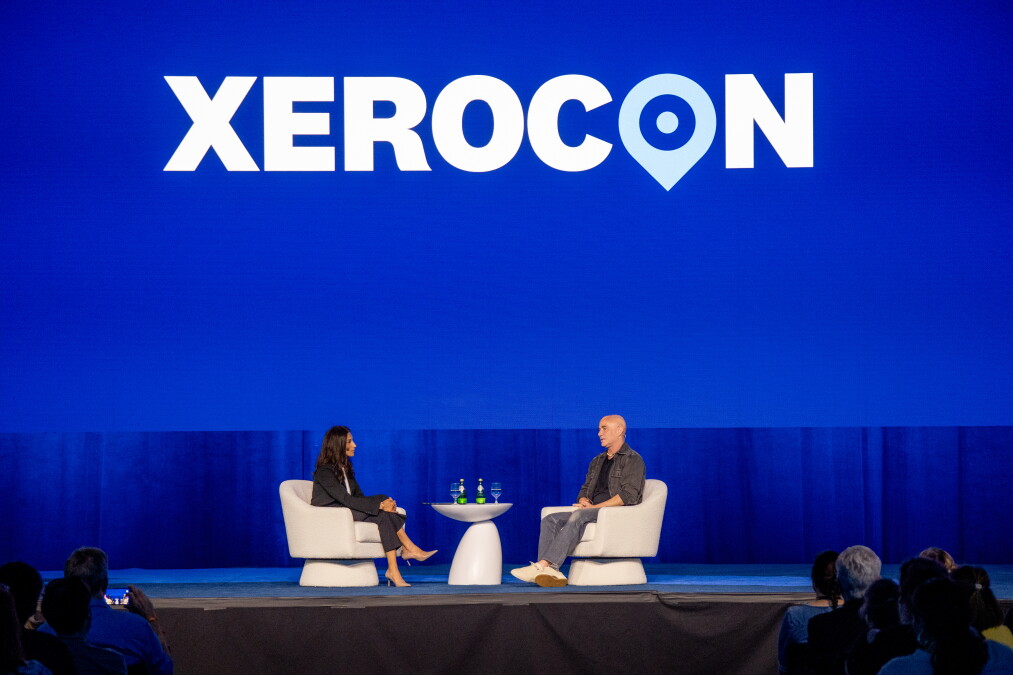
Xero launched JAX, an agentic AI system designed to automate administrative work in accounting, announced at Xerocon 2026.

YouTube webinar explores NotebookLM as a free AI platform for accountants, featuring expert Dr. Juan Carlos Mejía discussing practical applications for tax and bookkeeping workflows.