Accountants grapple with AI-prepared MTD files from clients
Accounting practices face new challenges when clients submit month-to-date filings prepared by AI tools, raising questions about verification, liability, and workflow integration.
TLDW: AI won't replace accountants who provide client context; the real risk is losing clients to competitors ('poachers') who claim better AI-powered tax solutions.
Key points:
Continue reading
So, good morning everybody. Um, I'm the other guy that's going to talk about AI. So, Mike did a great job of introducing Are you guys sick and period about it? So, I'm happy to talk more about it now. Um, you know, AI, like Mike said, is here. It's not going to go anywhere now. And the real fear around it for most people is it's going to take over what I do. And no matter what the profession is, you listen to the news and people talk, you know, there's going to be less and less of us sitting in chairs doing something for someone, which is generally going to be our clients. And that's only about as much of a reality as if we let be that way because the one thing that AI means more than anything um and read every study about it, it's context. And it's up to you to provide the context for AI to be effective. So, you know, it can read lots of things, but reading lots of things generally doesn't help you understand the context of anything unless you get down one or two levels more under the surface to be able to help make an understanding or um resolve conflicts that it may have with itself. So, you know, one context in this profession, whether it's financial services, tax advisory, CPAs, whatever the fact may be, you've gotten to know your clients. You've gotten to know the intricacies of their business and you've gotten to know, like Mike said, maybe the professional niche that they're sitting inside of and that there is here to support in general terms. But the the big fear is that it's never don't understand the context of our clients. So, you know, hopefully today what we can uh eliminate for you is some of the the propaganda that comes with, you know, having um AI to be your um we can't do fast enough is read more of the things that happen outside of what may come into your general feed on your social media or what you look at professionally to make sure that you are having as much information or education for yourself before you talk to your clients. It will help with that. But we'll talk a little bit more about that today as we go on and hopefully that dissolves some of that for you. That's it. So, I basically um just going to pause at a couple slides and really I want you to think about um are you going to be a leader in embracing AI in your workflow? Because what is happening out there is advisors all around the country that are pretending to be advisers. Anybody know what those are? We call those poachers. So there are people in wealth um individuals in wealth firms and other companies that are going after our clients that are basically saying I can do ERTC. I can do R&D tax credit. I can do I can do these and I have a better system than you can put together and your CPA or enrolled agent doesn't know what they're doing. Does that make sense? That's exactly what's happening even while we're up on stage. I know this because I talked all around the country and I'm actually hearing and sitting in the crowds going, "Wow, there are people coming after my clients." So immediately that I think these events, I go right back to my client base because I'm a practicing CPA and let them know, look, we've talked about R&D text me for them to communicate if they see hear something on TikTok or they hear something from somebody that I'm getting I get to go at least go use AI and figure out real quickly. Um, have I ever communicated that thought to to to my client or do I need to get, you know, get get busy? So, I'm going to let Adam go into what a human thinker is. Great. So, I was a non-believer or at least non-acceptor of AI um through the last couple of years. And in my business, I was a banker for 25 plus years at two large global banks. Um I ran a payments company that I um started and sold to Goldman Sachs and you know outside of that I've done consulting over the last few years. So I feel like my expertise is similar to all of your expertise like you want to buy me because you want to buy my experience and want me to help you. So how are you going to help you more than me when I have all the experience? So, you know, I've rejected all of that. And, you know, the the difficult part for me, and some of you may have some of this as well, is, you know, I have employees and I have other people that are trying to help me, but all my ideas stored in my head. I I'm the one that had the experience. And as a consultant, it's really hard to convey some of that sometimes. So, I have traps of not having enough things for them to do or not having enough for them to be able to add value when they're doing it. So, um, I took a test and if some of you have heard of it, some of you are not. There's something online that can say, um, challenging claw. So, you know, I I didn't believe that it could help me. So, I went and did this test. It was very easy. It It takes two days if you let it. Um, I suggest you do that. But it asked you two questions. You get to ask it as many questions as you want to. So, in the end, I spent a couple of days asking all the questions and tried to get an aayer out of it. And it asked me to. the two that had asked me at the end was um are you happy with where you are in your business today? And I answered no and it said if you were able to understand how cloud could help you with your business, would you consider? I said yes. So I went through two days of telling it all my resume, all the things that I think I knew, all the things that I thought it couldn't help me with. And in the end it said, "Do you have any questions for me?" And I said, "Why do I need you?" and it said you don't you don't need me looking through your resume looking through your LinkedIn you know lots of things you've been highly successful you have all these things that you can do there's one thing that I can offer you I said okay what is it that said just like everyone else no matter how smart you are no matter how successful you are you have the same thing in common with everyone else that will need I said what is it that said you are a 1D doer even though you're a 5D thinker So that's super interesting when it's 1D doer and it said if you have one opposable finger, one opposable thumb, you can do one thing at a time and I can do five times more than you can at all times because I don't have to worry about that. Okay, now I'm a believer. So I can get five times more production out of myself through you by just giving you more of my context. That's what I that's what I went with. And I believe if you really think about being the human expert where um AI will fall apart is it is a 1B thinking aspect of it unless you teach it to be your 5D thinking. 5D thinking meaning like what happens today, what happens next week, what happens next month and then if these things happen, what could it prevent or what doesn't it prevent if we don't do this ahead of time? That's where all of your experience comes in. So, you know, I would challenge you if you've taken nothing else out of the last couple of days, you know, around AI, just think about it for yourself personally is I can only do one thing at a time doing those other things because I'm teaching it to context. That's where I should have help my business instead.
I I I'm right with you. And is you've come to um has you got on and used chat? Who has not used AI on some form or another? So, most everybody in the room has actually asked somebody a question. Make sense? So, what Adam was talking about, so we're all there. We're going to get to a couple slides here where how to actually implement it in your practice and how I did it and we will um we'll move on. I'm let Adam get into this. So, hang in there. This is a tough slide. So, One of the things that I was just saying is you're not doing this as a replacement. You're doing it as a multiplication of yourself, right? You're amplifying your knowledge or amplifying your abilities. So, you know, when you look over kind of at the left side, you know, you're looking at you as the expert first. It's creating, you know, at least some type of problem solving the other person doesn't have when they come to you. Relationship like what we said. But really, it's the bottom two. It's ethical judgment and regulatory knowledge. Because while regulatory knowledge can be read and AI can expertly what the ethical judgment would be with context. So, you know, where this should be something that's great for you should be around those five things that are up on the board on the right side. analyzing, monitoring, executing it, and then classifying it and reporting it. But really what it comes down to is you have an AI do it does the work for you as long as you teach it the work that you want it to be doing and inside of the systems, inside of the ethics, and inside of the kind of um strategic thought process that you want it to go, you teach it that. And then at the end, it doesn't make any decisions. It presents decisions for you to make minds well enough. More importantly, does it understand me and how I think? And if so, I can trust all the recommendations that it's going to give me for me to make a decision on. And then you can feel good about it. Okay, here we go. Um, AI artificial, it collects data. So, When I've been attending over the last couple years any event, I want to have data that comes into my accounting program that is available day one after reporting period. Constantly in search of data partners, electronic data that actually able to pull in. So if you close your month on May 31st, 2026, what do we do on midnight? What happens is you're able to reach out electronic in to populate it my accounting system to be able to generate a cash basis. So just imagine that up to earnings before income tax appreciation am advertisation on June 1 of 2026 I basically was done the rest of the month. What did that do? That opened up capacity for me to accept new clients for my niche to build value to my practice. Does that make sense? So AI, think of colle
Accounting practices face new challenges when clients submit month-to-date filings prepared by AI tools, raising questions about verification, liability, and workflow integration.
Inkle challenges overhyped AI promises in tax software, arguing startups need practical automation over marketing-driven AI claims.
Yale budget policy expert argues U.S. tax system is structurally unprepared for AI-driven economic changes, raising questions about how automated agents will be taxed and regulated.
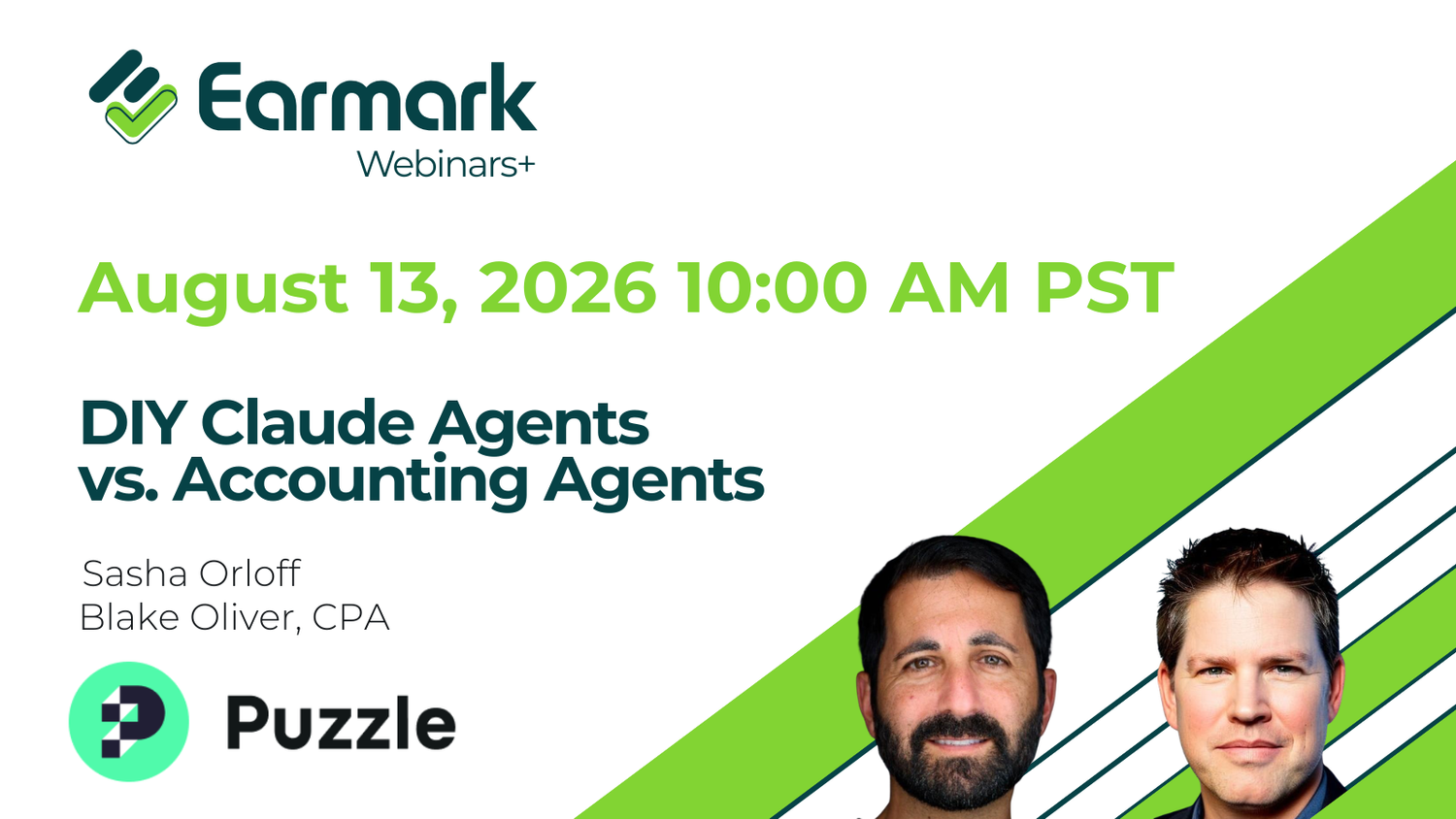
Blake Oliver built a Claude-based AI agent that logs into Xero to automate bank reconciliation, achieving 80% success but requiring manual intervention for permission walls, login flows, and mid-ta...
OpenAI's CFO Sarah Friar reveals lessons from deploying AI across forecasting, controls, and ROI measurement in finance operations, offering practical insights for enterprise adoption.